The author is well known in his native Iceland for translations, books for children, and as a publisher, but ONE TRUE WORD is his first thriller, and it's guaranteed to divide readers.
The premise is, on the one hand, straight forward, in that after an increasing period of snarking at each other, Júlía and her husband Gíó head off on a small boat to an uninhabited, small island in the middle of a freezing fjord as part of a research trip that Júlía claims is absolutely vital for her current work assignment. She then abandons him there in the depths of the Icelandic winter, returning home to a night of guilt ridden contemplation. But when she returns to the island the following morning, Gíó is nowhere to be found. A police search finds no trace of him, and obviously Júlía comes under suspicion, as her behaviour (and her failure to admit what really happened - the island / abandonment and all) starts to become increasingly erratic and questionable.
"Straight forward" in that it definitely seems that Júlía may not have directly killed Gío, but the complete lack of sightings, or evidence that he's alive, does seem to mean she's at least committed a form of manslaughter. Or is he out there somewhere biding his time, waiting for a chance for revenge? It's hard to tell, partly because Júlía is the main narrator of this story and she's a tricky woman to get a handle on. Gíó had definitely seemed to be more grumpy, more critical of everything she does all the time, and it feels like she had a right to be sick to the back teeth of him, and her reactions post the police starting an investigation, and her attempts to cover up her involvement feel like the actions of a guilty conscience. Not helped by the fact that part the way through the novel it's not at all hard to start to develop some feelings of sympathy for Gíó, as Júlía increasingly comes across as a bit of a liability and frankly, bloody annoying.
I do like novels like ONE TRUE WORD. They aren't immediately "entertaining" reading, and on the one level a lot of time is spent in the head of an increasingly unpleasant woman, but on the other level, it's pulling apart the expectations of normal behaviour and subverting the norm. A couple, who on the face of it, seemed reasonably content, with a reasonably good life, and a bit of material comfort, falling apart because of unrelenting sniping and dissatisfaction, but abandonment on a deserted miniscule island feels, well dramatic. Then again, it's just possible that Júlía or Gíó are world class unreliable narrators and there's considerably more going on at the heart of this story.
Did Júlía happily abandon Gíó to his fate, or was it a moment of madness that she'll live to regret? Or did Gíó take this opportunity to disappear from the radar and plot his revenge, or simply walk away? Or is there a third scenario? The reader won't know until you get to the end of the novel, and even then you might be left wondering. And therein lies the reason I found myself enthralled, and thoroughly invested right up what turned into a perfectly apt ending.
One True Word
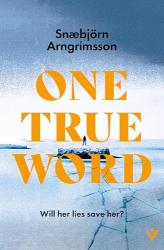
Why did she do it? After a day of simmering tension, Júlía snaps and abandons her husband Gíó on an uninhabited island in a freezing fjord in the depths of the Icelandic winter.
When she returns the next morning, he is nowhere to be found. The police launch a manhunt, but soon their suspicion falls on Júlía. She spins them a story to hide her involvement, but she can feel the net closing in.
Is Gíó alive or dead? In hiding or hunting her down? And can Júlía get to the truth before it destroys her?
Add comment