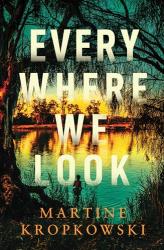
Three friends travel to Marcoy, a regional town for a weekend away from family life. One year ago, a tragic incident splintered the group, and the women have seen little of each other since.
Melissa has slept much of the past twelve months away, and she hopes this weekend will help her re-emerge from the depression she’s been living with. Bridie worries that she is not a good enough mother. She worries about most things, really, but she’s dealing with things just fine. At least that’s what she tells herself. In fact, she only agreed to this weekend away out of a sense of duty.
What Cassandra really needs is a break, so she’s come away to forget it all, to enjoy a cab-sav and an open fire and the company of her long lost friends.
This weekend is about reconnecting, about enjoying their friendship the way they used to, while not—at any cost—having to address the reason for the distance between them. But when they witness a young girl being coerced into a car by a father she fears, they are forced to reckon with the chasm of grief and trauma that’s kept them apart.
Everywhere We Look, Martine Kropkowski
Martine Kropkowski’s debut crime fiction delves into the devastating consequences of the epidemic of violence against women.
Melissa, Bridie and Cassandra are friends, bonded over the sorts of things that connect young mothers – pressure, expectation, exhaustion and isolation. What starts out as a chance encounter leads to coffee meetings and what they thought would be long and abiding friendships. Only there used to be four of them.
‘ … I’m Cassandra.’ She held out her hand and the woman shook it, introduced herself as Sarah, her husband as Lindsay.
One year ago, a violent act splintered the group of four, and the remaining three friends have seen little of each other in the intervening period. So a girls’ weekend away in the tiny town of Marcoy is their chance to reconnect and relax away from kids, partners and day-to-day life. Cassandra has chosen the location because it is remote, with limited mobile coverage; it’s an isolated town used to being self-sufficient. The house they’re staying in is on a winery; there’s food, wine, and plenty of quiet. Only, true to the title Everywhere We Look, the quiet here is full of menace right from the moment Melissa gets a flat tyre on the way into town and then encounters the same father and son who made her uncomfortable on the road at the pub later that first night.
While they drive away, Bridie turns to look through the back window of the hatchback, watches as the men shake their heads, head back towards the steps.
There’s room for the reader to think it could just be that these women are jumpy after what has happened in their collective past. They hear whispers in the bush, bumps in the night, odd manifestations, and seem on edge. But there’s also a lot more going on as they witness a young girl, Maggie, being forced into a car by a father she obviously fears.
A man – mid-forties, Melissa guesses – bursts out of the ute and storms towards the girl. Maggie sees him and begins to run, but he catches her easily, grabs her upper arm and wrestles her back towards the ute.
Maggie and her friend are just two of the people Melissa, Bridie and Cassandra come across in a short period of time. These strangers range from the seemingly reticent but normal, through to creepy and oozing menace. The women are wrong-footed right from the start – in particular, the lack of phone service is disconcerting.
The story unfolds via varying timelines, back to the past, to the women’s original meeting and the evolution of their friendship, through to the time when violence badly affected them, and now in the present. Each woman’s story is told individually, bouncing the reader backwards and forwards into her experiences. It’s purposely jarring, but not off-putting, as the style contributes to a sense of something building, and gradually coming into focus as that past perspective starts to provide clarity. It’s also confronting, as these women must finally acknowledge the things they chose to ignore or downplay – the things that now make them question everything and everybody.
That perspective impacts their reactions and instincts, so when Maggie goes missing alongside rumours that she’s taken a shotgun with her, and the town instigates a search team to look for her, the three friends feel they can’t be found wanting again. Each has a very different response, however. Cassandra joins the search, certain the police aren’t taking their report of the ute incident seriously, while from the depths of depression, Melissa voices some of their shared concerns from a very personal perspective.
Is it possible she could carve out a different story, one with her in the picture too?
She brings her hands to her mouth, leans her elbows on the steering wheel, stares at nothing.
Thinks.
Bridie, on the other hand, is still processing, listening to the conversations around her, trying to work out what’s happening to her, struggling with her first separation from her very young child. She’s frightened, timid, unsure, and needs time.
The ripple effect of threat and hyper-vigilance, family violence, violence against women and girls, is the central theme of Everywhere We Look. The way this sort of violence, in particular, infects friends, families and communities is explored unflinchingly but sympathetically. It provides a really clear insight into why this is such an insidious issue – its closeness to what we think of as normal everyday life, the doubt it creates. The guilt.
What these three women ultimately end up facing is twofold. First is the change that is forced on them:
This idea of creep occurs to Cassandra, tiptoeing over uneven ground in the dark of night, while she considers this weekend, how the creep away from what she used to class as a completely normal thing to do has been swift.
And second is how they manifest trust. As they are tiptoeing around in that bush, they confront a startling sight:
The outline of a figure, Maggie’s father. Emerging from the bush.
A shotgun laid across his forearm. He points it at them.
In the blink of an eye they have to decide if they can trust their instincts and their ability to assess a situation, without denial or avoidance. In this instance, deep in the bush at night, with no idea where they are or who is nearby, and Maggie still missing, is this yet another man who can’t be trusted, who will resort to violence? And what do they do about it? Decisions made more complicated by the strange encounters they have already had in this small town in such a short time. As they assess who they can trust, and just how involved in Maggie’s life they can or need to be, they are finally forced into framing the question that has been in the back of all their minds, with Bridie taking the lead:
… gossip surrounding her relationship was tossed around the schoolyard like a handball … through all of that the only question Bridie had asked was why. Why hadn’t she left him? And why hadn’t she confided in Bridie?
She’d never considered the question from the other perspective. Why had Lindsay treated Sarah like that? Why hadn’t HE asked for help?
The resolution in Everywhere We Look is an unexpected and bold twist. Shocking on one hand, very appealing on the other, this is a novel that forces readers to think about that final question.